- Home
- Company Profile
-
Our Products
- 2 Tier Wire Shelving for Commercial Storage
- 3 Tier Wire Shelving for Commercial Storage
- 4 Tier Wire Shelving for Commercial Storage
- 5 Tier Wire Shelving for Commercial Storage
- Wire Shelving Accessories for Commercial Storage
- Corner Wire Shelving for Space-Efficient Storage
- Mushroom & Microgreen Growing Racks
- Blogs
- Contact Us

Wire Shelving Accessories for Commercial Storage


Wire Shelf Ledges
Wire Shelf Ledges Accessory – Wire Shelving Accessories Suppliers
Wire Shelf Ledges are industrial components designed to prevent items from slipping off commercial wire shelving units, enhancing organization and operational safety. Integrated with wholesale wire shelving accessories and OEM wire rack accessories, their reinforced structure ensures stability and consistent performance across institutional and industrial environments. They are compatible with bulk commercial wire accessories networks and private label production programs.
Functionally, Wire Shelf Ledges support inventory control, operational efficiency, and export-ready supply chains. OEM customization and private label branding options are accommodated. Their design facilitates commercial sourcing channels, contract manufacturing, and international logistics, ensuring compliance and traceable quality in regulated B2B environments.
Key Features
- Reinforced ledge design preventing item displacement
- Stable integration with wire shelving systems
- Compatible with wholesale and private label accessory programs
- Supports OEM customization and bulk commercial deployment
- Optimized for regulated institutional and commercial environments
Technical Attributes
- Material: Industrial-grade steel or reinforced polymer for mechanical resilience
- Load Capacity: Medium-duty cycles suitable for commercial and institutional use
- Integration: Seamless compatibility with modular shelving layouts
- Compliance: Export-ready with quality certifications for regulated markets
- Customization: OEM and private label production options available
Price upon request

S-Hooks
S-Hooks Shelving Accessory – Wire Shelving Accessories Suppliers
S-Hooks are industrial components designed for secure attachment and modular organization within commercial wire shelving systems. Engineered for integration with bulk wire shelving accessories and OEM wire rack accessories, they provide structural stability, ease of installation, and reliable operational performance across institutional and industrial environments. Their design facilitates configurable shelving layouts and inventory management efficiency.
Functionally, S-Hooks support private label production, OEM customization, and bulk export supply programs. Their structural integrity ensures consistent performance under medium-duty load conditions. Designed for regulated markets, they enable commercial sourcing channels, quality compliance, and contract manufacturing initiatives within enterprise-level wire shelving networks.
Key Features
- Durable attachment hooks for secure shelving organization
- Reinforced design maintaining stability under medium-duty loads
- Compatible with wholesale and private label wire shelving accessory programs
- Supports OEM customization and bulk commercial deployment
- Optimized for institutional and regulated market operations
Technical Attributes
- Material: Industrial-grade steel or engineered alloy for strength
- Load Capacity: Medium-duty cycles suitable for commercial and institutional applications
- Integration: Compatible with modular wire shelving layouts
- Compliance: Export-ready and certified for regulated markets
- Customization: OEM and private label production options available
Price upon request
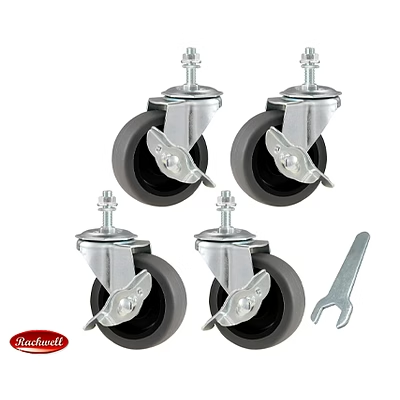
Castor Wheels
Castor Wheels Accessory – Wire Shelving Accessories Suppliers
Castor Wheels are industrial components designed to enhance the mobility and operational flexibility of commercial wire shelving systems. Engineered for integration with bulk wire shelving accessories and OEM wire rack accessories, they provide reliable performance for dynamic institutional and industrial storage applications. Their durable construction ensures stability, smooth rolling capability, and predictable mechanical behavior across high-volume deployment scenarios.
Functionally, Castor Wheels facilitate optimized inventory movement and system reconfiguration while supporting private label production and OEM customization programs. These accessories are compatible with bulk export supply, international logistics, and commercial sourcing channels. Their design ensures regulatory compliance and quality certification, enabling enterprise-level deployment and contract manufacturing integration.
Key Features
- Durable wheel assembly for smooth mobility and load handling
- Precision-engineered bearings ensuring consistent performance under medium-duty cycles
- Compatible with wholesale and private label wire shelving accessory programs
- Supports OEM customization and bulk commercial deployment
- Stable operation in institutional and regulated market environments
Technical Attributes
- Material: Industrial-grade steel or reinforced polymer for durability
- Load Capacity: Medium-duty cycles suitable for commercial and institutional use
- Mobility: Smooth rolling with integrated bearings for operational efficiency
- Compliance: Quality-certified for regulated markets and export-ready supply
- Customization: Available for OEM and private label programs
Price upon request
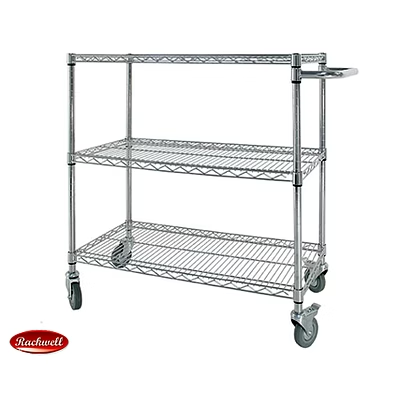
Mobile Cart Shelving
Mobile Cart Shelving Accessory – Wire Shelving Accessories Suppliers
The Mobile Cart Shelving is an industrial component engineered for dynamic commercial storage applications requiring mobility and organized multi-tier layouts. Designed for integration with wholesale wire shelving accessories, it supports bulk commercial wire accessories networks and OEM wire rack accessories deployment. Its modular framework ensures stability, efficient load distribution, and operational reliability across diverse institutional environments.
This accessory optimizes storage flow and inventory management while accommodating private label production and OEM customization programs. Its design facilitates bulk export supply and international logistics, supporting contract manufacturing and quality compliance initiatives. Mobile Cart Shelving is suitable for enterprise-level deployment and regulated market procurement, ensuring traceable performance across high-volume commercial sourcing channels.
Key Features
- Modular mobile cart design enabling flexible storage reconfiguration
- Reinforced structure for predictable stability under loaded conditions
- Compatible with wholesale and private label wire shelving accessory programs
- Supports OEM customization and bulk commercial deployment
- Optimized for institutional and regulated market operations
Technical Attributes
- Material/Build: Industrial-grade steel or engineered composite framework for mechanical resilience
- Mobility: Smooth-rolling caster integration for operational efficiency and repositioning
- Load Capacity: Medium-duty cycles suitable for enterprise and institutional use
- Compliance: Documentation supporting regulated commercial sourcing
- Customization: OEM and private label production options available
Price upon request

Extra Wire Shelves
Extra Wire Shelves Accessory – Wire Shelving Accessories Suppliers
Extra Wire Shelves are industrial components designed to expand the storage capacity of commercial wire shelving systems. Compatible with wholesale wire shelving accessories and OEM wire rack accessories, these shelves provide structural stability, mechanical resilience, and seamless integration with bulk commercial wire accessory networks. Their modular design supports private label production and enterprise-level sourcing programs.
Functionally, Extra Wire Shelves enable scalable storage solutions, improving operational efficiency and inventory management. They are suitable for OEM customization, bulk export supply, and private label initiatives. Compliance with regulated markets and quality certification supports contract manufacturing and commercial sourcing channels, ensuring reliable performance across institutional and industrial facilities.
Key Features
- Modular shelf design enabling scalable storage expansion
- Reinforced construction for mechanical stability under medium-duty loads
- Compatible with wholesale and private label accessory programs
- Supports OEM customization and bulk commercial deployment
- Optimized for institutional and regulated market environments
Technical Attributes
- Material: Industrial-grade steel or reinforced metal mesh for structural integrity
- Load Capacity: Medium-duty cycles suitable for commercial and institutional use
- Integration: Seamless compatibility with existing modular wire shelving layouts
- Compliance: Export-ready documentation and quality-certified for regulated markets
- Customization: OEM and private label production options available
Price upon request
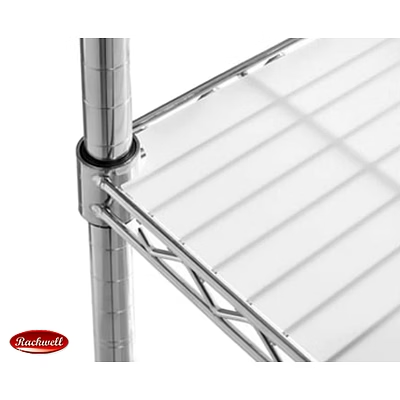
Wire Shelving Liners
Wire Shelving Liners Accessory – Wire Shelving Accessories Suppliers
Wire Shelving Liners are industrial components designed to provide flat, stable surfaces within commercial wire shelving systems, enhancing storage versatility and preventing small items from falling. Compatible with wholesale wire shelving accessories and OEM wire rack accessories, they offer consistent mechanical performance and integration with bulk commercial wire accessories networks. Their design supports private label production and traceable quality assurance.
Functionally, Wire Shelving Liners improve inventory handling efficiency and operational stability. They are compatible with OEM customization programs, bulk export supply, and private label branding initiatives. These liners facilitate regulated market compliance, contract manufacturing, and commercial sourcing channels, ensuring enterprise-level reliability and international logistics support.
Key Features
- Flat, reinforced surfaces enhancing storage versatility
- Durable construction preventing small item loss
- Compatible with wholesale and private label accessory programs
- Supports OEM customization and bulk commercial deployment
- Optimized for institutional and regulated environments
Technical Attributes
- Material: Industrial-grade polymer or metal sheet for stability and load distribution
- Integration: Seamless fit with modular wire shelving layouts
- Load Capacity: Medium-duty cycles suitable for commercial and institutional use
- Compliance: Export-ready and quality-certified for regulated markets
- Customization: OEM and private label production options available
Price upon request
A. Clear Category Definition
These products belong to the wire shelf accessories category and should be understood as a collection of shelving options rather than a single item. The category is defined by its shared storage function, open-wire construction style, and modular commercial use across multiple facilities and buying contexts.
Includes:
- replacement shelves and add-on shelves
- casters or mobility kits for moving shelving units
- shelf liners, ledges, hooks, and dividers
- cart conversion parts and add-on storage components
Excludes:
- complete freestanding shelving systems sold as finished units
- heavy pallet racking or mezzanine structures
- non-compatible storage hardware made for unrelated systems
Examples:
- Example only: Castor Wheels
- Example only: Extra Wire Shelves
- Example only: Mobile Cart Shelving
B. What These Products Are Used For
This category supports existing wire shelving systems by helping teams expand, protect, move, or organize storage setups without replacing the entire rack. The open format is commonly chosen where buyers need better airflow, fast visual stock checks, and flexible shelf access. In practical terms, this category solves the problem of cluttered or inefficient storage by helping teams use vertical space without creating the closed, bulky feel of cabinets or fixed industrial rack systems.
C. User Intent Alignment
Buyers searching this category are usually trying to source multiple options, compare materials and formats, or narrow down which shelving style fits their environment. Comparison intent is common because procurement teams want to weigh price, finish, durability, and layout fit. Learning intent is also present when users need to understand whether open wire shelving is better for hygiene, visibility, or airflow. Replenishment and reordering intent appears when an existing site wants matching shelves, additional units, or compatible upgrades. The strongest search patterns therefore align with Commercial, Comparison-based, Problem-solving, and Transactional behavior.
D. Key Variations Within the Category
- Accessory type such as liners, ledges, hooks, shelves, or wheels
- System compatibility based on shelf size, post diameter, and brand family
- Material and finish for hygiene, corrosion resistance, or general dry use
- Mobility versus stationary upgrades depending on workflow needs
- Protection and containment features for small items or customer-facing areas
- Replacement versus expansion parts depending on whether buyers are repairing or scaling a system
E. Use Cases & Scenarios
Common buyers include B2B buyers, commercial kitchens, distributors/resellers, and existing shelving owners. They use these items to reduce product fall-through, create mobile carts, add replacement levels, improve picking access, or adapt shelving for changing workflows. In warehouses and backrooms, add-on shelves and casters support faster reconfiguration. In kitchens, labs, and healthcare spaces, liners and ledges help keep small packs, containers, or tools organized. Geographic demand signals in this dataset point toward GCC, India, North America, and Southeast Asia, where commercial storage, foodservice, healthcare, export distribution, and space-efficient facility planning all matter.
F. Selection Guidance
Selection usually starts with compatibility. Buyers first confirm the shelving platform, shelf footprint, and mounting style already in use. They then compare whether the need is for mobility, containment, hygiene, replacement, or expansion. Lower-cost accessories can solve quick workflow issues, while heavier-duty parts may be better when the shelving unit carries frequent daily loads or is moved often. For B2B buyers, the best option is usually the one that matches the operating environment, storage density, cleaning routine, and future expansion plan instead of the lowest upfront price alone.
G. Internal Entity Relationships
Related decisions often include whether the buyer also needs complete shelving units, replacement posts, corrosion-resistant shelves, or mobile cart setups. Common subcategory groupings include mobility accessories, containment accessories, replacement shelves, and organization add-ons. Example brand signals in the input, such as Rackwell, should be treated as examples within the category, not as the full category scope.
